

Kimberly Williams with her two-week-old, Kaleb. Photo Credit: Ana & Ivan Photography
PREPARING BEFORE BIRTH:
Serving doubles at the breastfeeding bar, straight up with a twist of peaceful parenting.

Kimberly Williams with her two-week-old, Kaleb. Photo Credit: Ana & Ivan Photography
PREPARING BEFORE BIRTH:


To the people who ask…
“Why do you *still* breastfeed?”
“Why do you breastfeed a toddler?”
…I could tell you a few things.
I could tell you that the World Health Organization recommends breastfeeding for a minimum of two years and beyond as desired by the mother and child.
I could tell you that the biologically natural age of weaning for humans is between 2.5 – 7 years.
I could tell you that breast milk is just as nutritious (and actually packed with more antibodies) for young children as it is for young babies.
I could tell you that my child likes to have the option of nursing for comfort, just as much as he likes hugs, kisses, and self-soothing techniques.
I could tell you that breastfeeding is more than just food.
Many of these answers worked for a while. A good two years, really.
But now that I’m growing a second child in my womb and MaiTai is three years old, the questions have changed.
“Why do you *still* breastfeed during pregnancy?”
“Will you tandem nurse and why would you do that?”
This time the answer is simply… I don’t know.
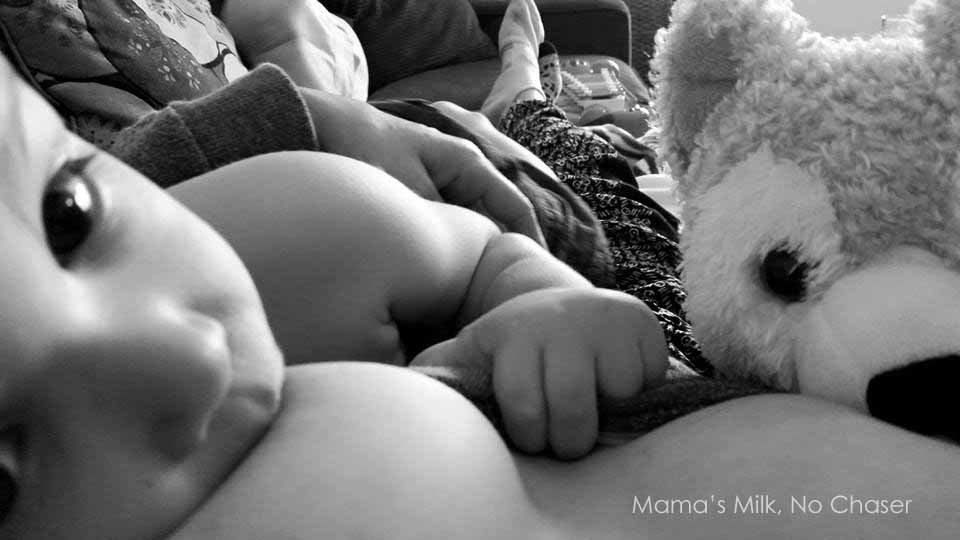

I remember being a toddler. Breastfeeding was nowhere on my radar. At ages three to five (and before and beyond), I had no awareness of any of my peers being nursed at home or elsewhere.
I didn’t breastfeed at age three. I also didn’t breastfeed at age three hours or age three months, not unlike the majority of my generational comrades. My own home was a warm and attachment-friendly one of course, but breastfeeding was never part of it.
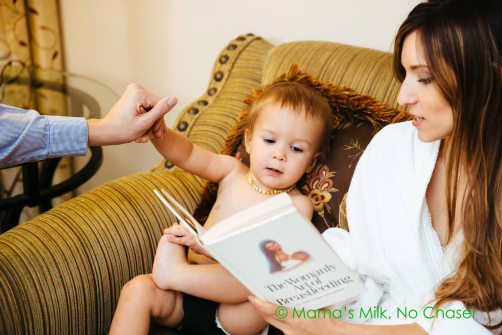
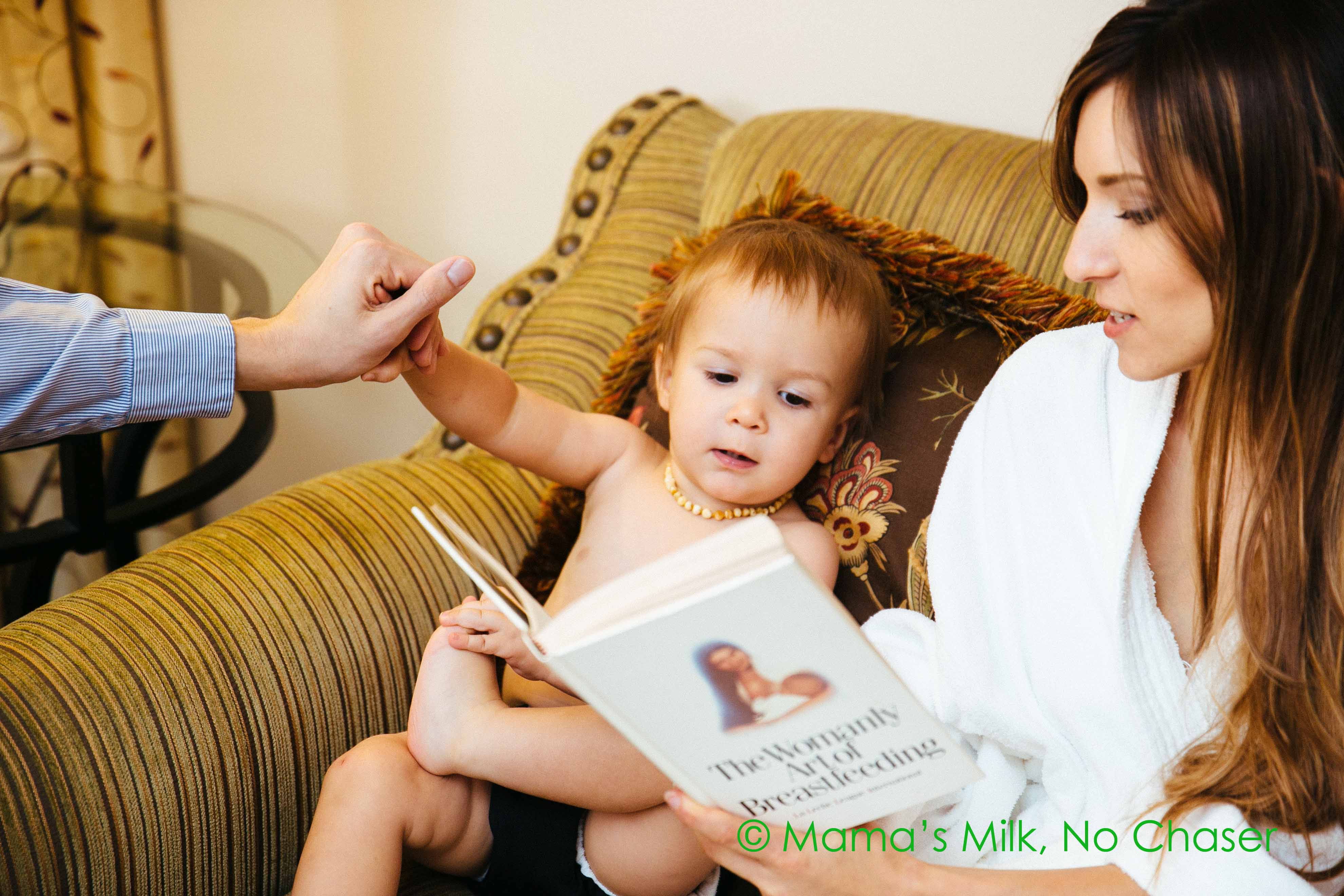
I’m sure you already own La Leche League’s “bible,” The Motherly Art of Breastfeeding. And I bet you’ve already studied everything written by Dr. Sears, Ina May Gaskin, Nancy Mohrbacher, Kathleen Kendall Tackett, Kathleen Huggins, and Dr. Jack Newman on the topic of breastfeeding.
But maybe now your nursling is old enough to read a breastfeeding book of his own before bedtime. Maybe you’re over all the “how-to’s” and crave to read a book created especially for impassioned breastfeeders. Or maybe you’re expecting a new nursling soon and want to familiarize yourself with previously uncharted territory.
Here are books about breastfeeding that deserve a spot on your holiday wish list and a home in your permanent collection!
First, a few stocking stuffers for your kids…
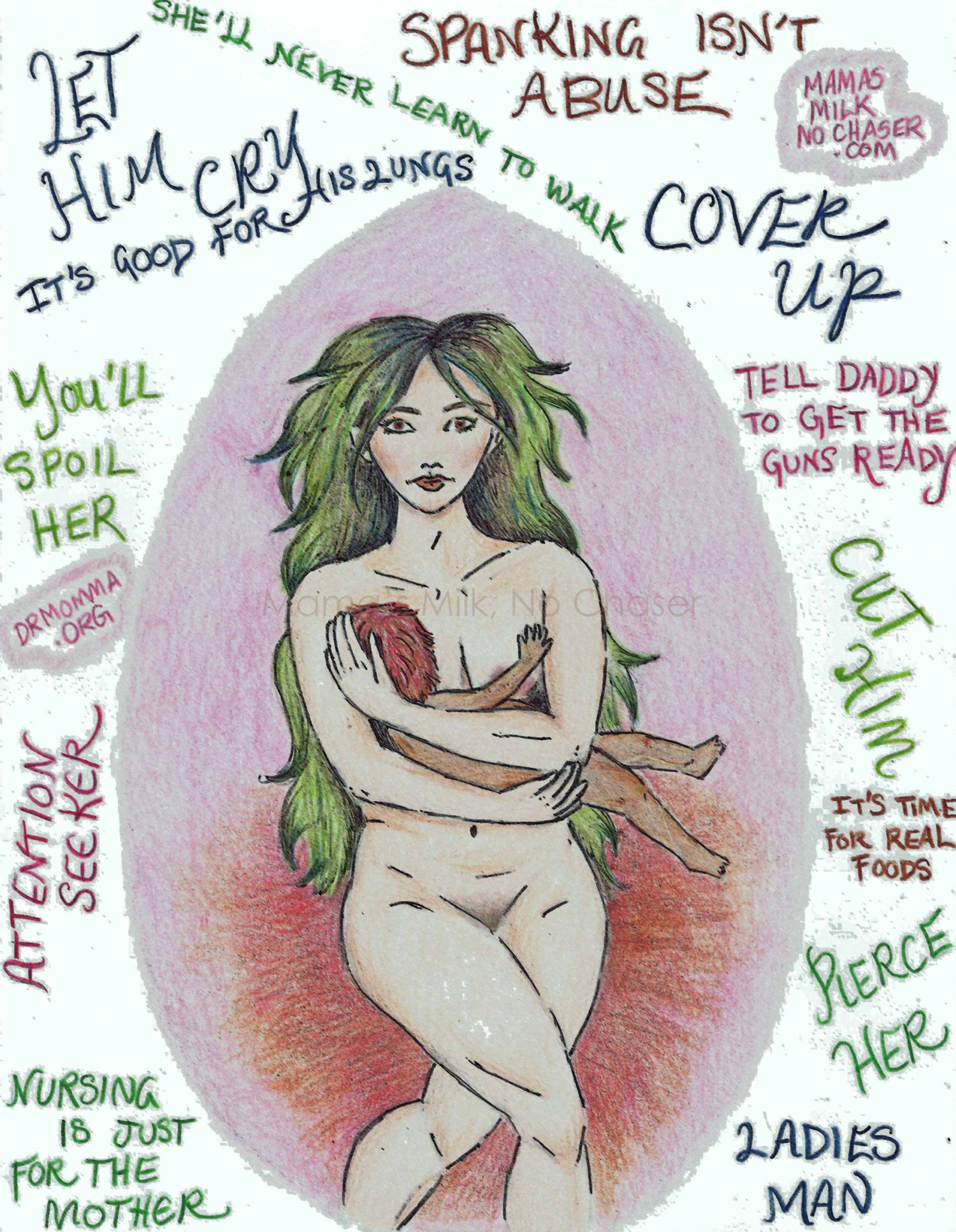

Anyone who follows this site will understand this post is *OBVIOUSLY SATIRICAL.*
Newcomers, take a moment to think about what the above picture symbolizes to you. The mother, naked and vulnerable, preserves a bubble of peace with her baby, in seemingly necessary quarantine from the bold, harsh words that hope to infiltrate their haven with little concern for the affect it might have upon them.
Here are not-so-uncommon perspectives (inspired by actual commentary I’ve seen or heard) that demonstrate how to upset and further isolate yourself from the not-so-uncommon kind of woman described above.
1). Let him cry… it’s good for his lungs.
Then try to convince her that dropping him on his head is good for his brain.
2). You’ll spoil her.
A baby spoils by being carried just like an apple spoils simply by being carried. That’s how it works.
3). She’ll never learn to walk.
Then you can explain how it’s better for both of them if the child is forced to walk everywhere. It’s not like it’d inhibit the mother from moving about in a timely manner or result in the child feeling abandoned. Read More
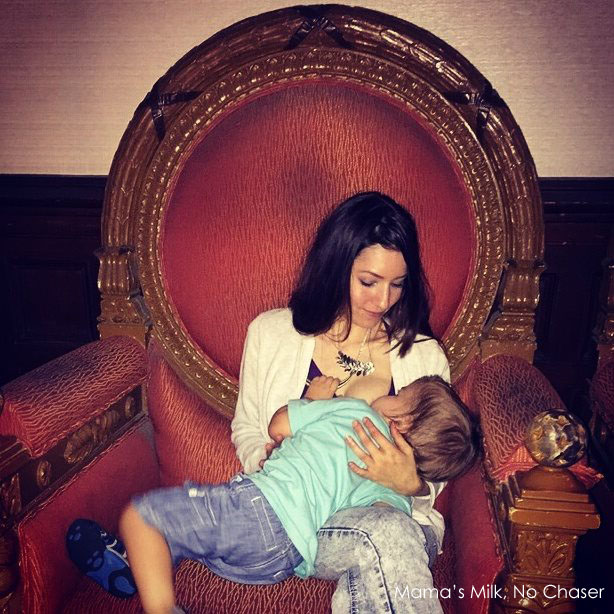

I really never imagined I’d be nursing during a pregnancy. It amazes me the endurance of this tradition we’ve made and how it’s seen us through so much.
I don’t know if almost three-year-old MaiTai will tire of it soon, or if aversion will strike the crazy into me and call a halt by my discretion. Or if we’ll just keep nursing like we always have, because it’s as normal a thing to do as would be not choosing to continue.
I do know that nursing isn’t so comfortable anymore. Aversion is milder so far than with bleeding cycles, but it just feels… different. Not all oxytocin-rush-of-pleasantness, squeeze-him-tight and never let go, butterflies of love swooping through my body kind of stuff like I wrote about here.
It feels how I imagine some people who’ve never breastfed might think breastfeeding feels like — a little person sucking on your skin, perhaps a most unwanted hickey? Still it’s not “gross” (he’s my baby, he’ll never be icky to me!) but it’s not a street paved in my favor as far as physical contentment. Emotionally though? Another story.


“A photograph is more than merely a picture…it is an heirloom [that] has the power to transcend generations” – Anel Lestage
Photos have always been so important to me. To please my especially nostalgic heart, I look back on photos often. To satisfy my desire to connect with others (as an especially introverted person), I share my photos often. And I love knowing that when I’m not around, a moment I lived is at least immortalized through another’s eyes behind a lens.
Of course, my favorite, most cherished photos feature my soulmates — my family.
Most recently, my littlest soulmate MaiTai joined me for a Natural Mama Nursing Photo Session with photographer Anel Lestage of Whimsy Candids Photography.
On her web site, Anel explained:
“It is my goal to capture the essence of the marvelous blessing that is motherhood from womb all the way to baby’s first year; as well as that tender, playful stage of the early years. I believe that for a mother, a photograph is more than merely a picture; it is an heirloom that speaks to her heart, delights her soul, and has the power to transcend generations, connecting her posterity to those who came before.”


Photo Credit: Leilani Rogers
Emily Medley, public programs director for Houston’s Health Museum, looked out from the podium to explain what led her to this place of passion for normalizing breastfeeding in public.
She recalled a time she went into the museum bathroom, and an uncomfortable scuffling drew her attention from one of the farthest stalls. She realized almost immediately there was a mother inside that stall, breastfeeding her baby on the toilet. It broke her heart.
Emily was pained to realize a mother could so greatly fear the stigma and criticisms (whether quiet or loud) that come with public nursing, that even with laws to protect her right to naturally feed in many states, she still doesn’t feel welcome enough to care for her baby where people can see her. A place of isolation and privacy only… a toilet.
She planned to close out this year’s World Breastfeeding Week in a very special way by hosting this museum presentation by Leilani Rogers, an Austin photographer and founder of The Public Breastfeeding Awareness Project. The exhibit called “Cradle Me Here” featured mothers nursing their babies and children throughout the museum on demand –“live breastfeeding art,” if you will — in response to a need, just like they would any other day or place.
Emily wanted us to know how thrilled she felt to host the event for us and that the museum not only welcomes breastfeeding mothers and our “SO beautiful babies!” but cherishes and respects us, too. After all, the museum board is on track to refocus what their education is “all about.” Now the museum touches most upon “the things that make us human,” and recognizes breastfeeding as one of the first major (and most normal) impressions upon childhood and lifelong physical and emotional health.
Despite all the attention given to those who just don’t “get it,” many people like Emily and Leilani do commiserate with the plight of a publicly breastfeeding mother. I myself have endured a few disappointing experiences breastfeeding in public (read about two here and here), but I’ve enjoyed some memorably positive ones too.
By sharing a few personal stories of positive NIP experiences, I hope that any mother who fears or hesitates to feed her child in public may be encouraged to do what she feels is best for her child — which will never be, at any age or level of publicity or food type, to serve him a meal on the toilet.
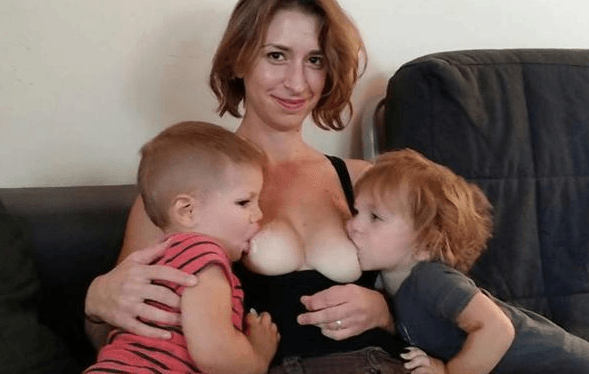

Jessica Anne Colletti is seen in this photo breastfeeding Lucian (right) and Mateo.
“This is not child abuse, this is child care.”
So we heard on Good Morning America. But what did everyone else have to say about the woman named Jessica Anne Colletti who proudly shared the basics of her special infant feeding arrangement with a close friend?
She started watching her friend’s 5-month-old son when his mother went to work and he no longer tolerated the formula she’d provided for him in her absence. So she offered to nurse the baby as well as her own then-3-month-old when she was tasked with their care.
Both women had discussed and agreed to the idea and it allowed the working mother to breastfeed for 9 months. The mothers publicized their situation to raise awareness of this option that continues to work well for their families.
The mother shared a photo of her and two nurslings, one of whom is her friend Charlie Interrante’s son, on the Facebook page for Mama Bean Parenting with the caption:
“My son on the right is 16 months and my friend’s son is 18 months. I watch her son while she works and have been feeding them both for a year! So much love between these milk siblings, it’s a special bond between us all.”
And then… the internet exploded in a firestorm of hatred and disgust!
Before tackling that, let’s get our definitions straight. (For the purpose of this post, I’ll refer to these interchangeably as “wet nursing”):
Wet Nursing — the complete nursing of another’s infant, often for pay.
Cross Nursing — the occasional nursing of another’s infant while the mother continues to nurse her own child, often in a child care situation.
Here are 9 perspectives (paraphrased) seen repeated on every thread that shared this story, making it even more difficult for us to understand and appreciate the concept of wet nursing:


1.) TRIVIA TIME
Post breastfeeding trivia on your social media. Here are a few fun fact categories to start you off:
2). SAY THANKS TO MOMS
Thank a mother for breastfeeding. Put one of these cards in the hands of a mother you see nursing in public — or if you’re the shy type, leave it on the windshield of her car or tell her “I think you dropped this” before scampering off. So long as she gets the message, mission accomplished!
Check out a selection of cards here (Spanish version also available).
I’m lucky enough to live in a region that is largely supportive of breastfeeding rights. I entered into this scene that was set up, fought for, petitioned and won over by many an oppressed and frustrated mother before me.
Still yes, harassment in public happens far too often, but in my city of Houston we enjoy regular breastfeeding-friendly awareness events, local support by way of writers and sponsors and vendors and women’s healthcare workers, and lots of options for La Leche League meetings and other in-person connections for new mothers.
This is NOT the case everywhere.
Some states and cities and countries need more help than others kickstarting the official protections of breastfeeding families.
PLEASE SIGN these three petitions and share on your social media. Deadline is August 1st. Every vote matters!


Breastfeeding is the biologically normal way to feed a child and it’s positive impact on the economy and health sectors of South Africa can no longer be denied.
Mothers are routinely shamed for public breastfeeding or asked to cover or move off to a public bathroom to feed their infants, and many mothers find that due to their companies non-compliance with our current Code of Good Conduct regarding Pregnancy and Breastfeeding, they are forced to cease breastfeeding well before they are comfortable or financially able to do so, and well before the World Health Organisations recommendation of 2 years.
By signing these 3 petitions we can make a positive change in South Africa by protecting and supporting a child’s most valuable right, the right to optimal nutrition, a right that is enshrined in South Africa’s constitution.
Anél Olsson from Normalise Public Breastfeeding in South Africa and Helen Ilitha, an…
View original post 185 more words


“Madonna Litta” by Leonardo Da Vinci, 1600s

“The Virgin Nursing the Child,” by Pompeo Batoni, via Public Domain / Wikimedia Commons

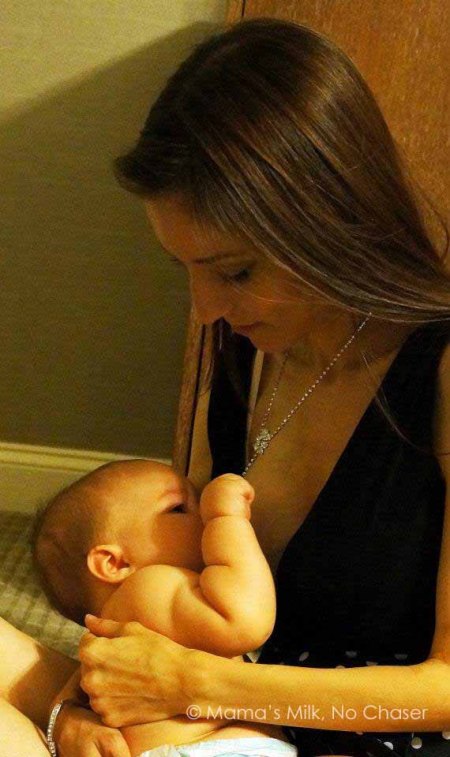
If you never see breastfeeding, you’re missing awareness of a few things, or a true understanding of the whole thing — just like I was before I eventually saw it.
This way of child nurturing is so natural it can easily blend in with everything else we attend to in our domestic, professional, and social lives. But blending in is not equal to disappearing.
If you never see it, you may not know it’s how many women learn to become mothers. You may not know it’s how they continue to learn about who they are as mothers. So we must make a point to not let the image and act of breastfeeding disappear.


Photo Credit: Yvette Michelle for the Normalizing Breastfeeding Project 2015
I want to tell you I love you. So I say it,
and you hardly look up from playing
with your trucks. My words are hardly heard,
you are so busy. Then soon enough you ask to nurse
on the couch, you request, and we curl up together.
You teach me that actions do speak louder than words.
_________________________________
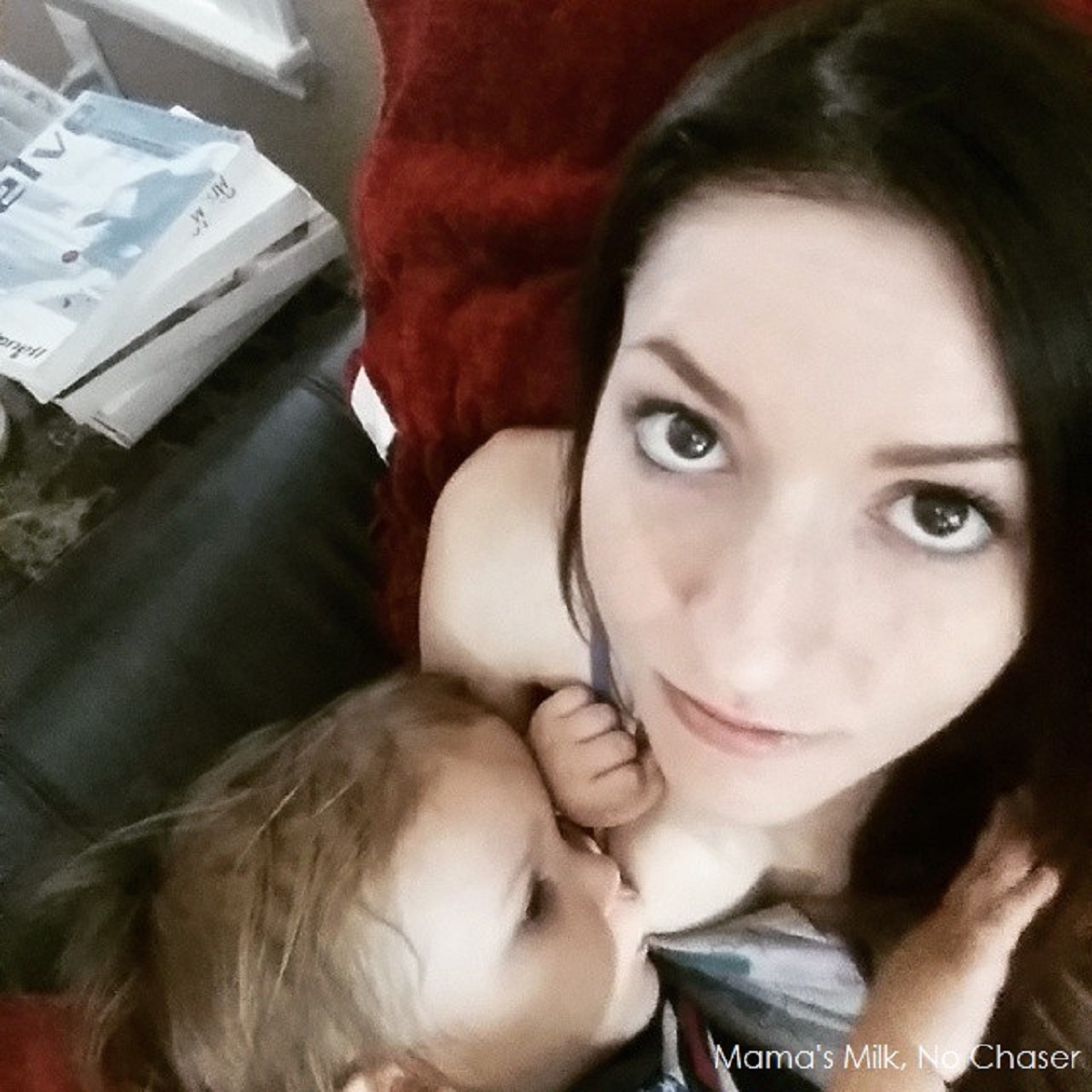
This was my job as a mother to an infant: to nourish and love and protect my baby. Usually I could do all three with one tool… breastfeeding. During MaiTai’s infancy, it seemed breastfeeding was the best answer to almost anything.
Hungry? Nurse. Thirsty? Nurse. Overtired? Nurse. Bored? Nurse. Hurt or sick? Needing closeness? Feeling affectionate? Nurse, nurse, nurse. Of course, other types of attention and problem-solving were plenty helpful (looking at you, Sofie the Giraffe), but nothing quite like offering a breast in those early months.
In “My First Year of Breastfeeding”, you can read about how we managed from the first feed until the first birthday. I also posted a child-led weaning series (Part 1, Part 2, Part 3, Part 4) where I explained the whys and hows of nursing beyond infancy, sometimes known as full-term breastfeeding/natural-term breastfeeding (I avoid the label “extended-term” because it’s a sustained practice rather than an addendum).
Here I’ll share what’s changed (or not) in toddlerhood nursing from the earliest days.
 Mama's Milk, No Chaser