

Kimberly Williams with her two-week-old, Kaleb. Photo Credit: Ana & Ivan Photography
PREPARING BEFORE BIRTH:
Serving doubles at the breastfeeding bar, straight up with a twist of peaceful parenting.

Kimberly Williams with her two-week-old, Kaleb. Photo Credit: Ana & Ivan Photography
PREPARING BEFORE BIRTH:
What do you do when you can’t scratch the itch?
I’d heard of itchy skin during pregnancy before. Caused by the stretching and growth of new skin to accommodate expansion of new life within and coupled with pregnancy hormones that can dry out the tissues, itchiness is as common as stretch marks.
What I hadn’t heard of until a few weeks ago is a condition called Pruritic urticarial papules and plaques of pregnancy (PUPPP or PUPPS) or polymorphic eruption of pregnancy (PEP) as it’s known in the UK.
I noticed an odd rash appear on my abdomen a few times during the start of my second trimester. Strange, I never had this during my first pregnancy, I thought… But it would disappear within a few hours each time and didn’t feel painful.
Until it really did.
**Advance Notice – This post contains several photos of my PUPPP rash (only abdomen is visible)**

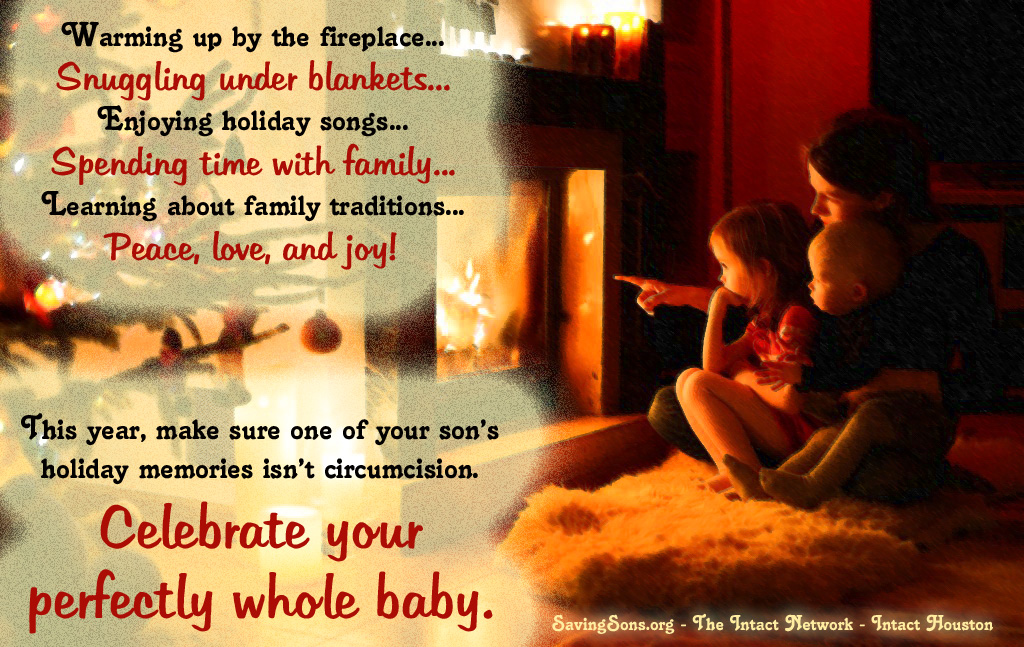
One of the things I do for Intact Houston (local affiliate of the volunteer-based grassroots organization, The Intact Network/Saving Our Sons) is not only advocate for genital autonomy by sharing thought-provoking images, but by creating original ones too.
Above is the most recent graphic I made for the chapter. I expect it to be my last original graphic of 2015.
So in honor of the year’s baby-saving successes with Intact Houston, I’m listing the top 21 most popular original images I created and posted on the chapter page in 2015.
(Each image is prefaced with the text and links that accompanied it when it was first published).

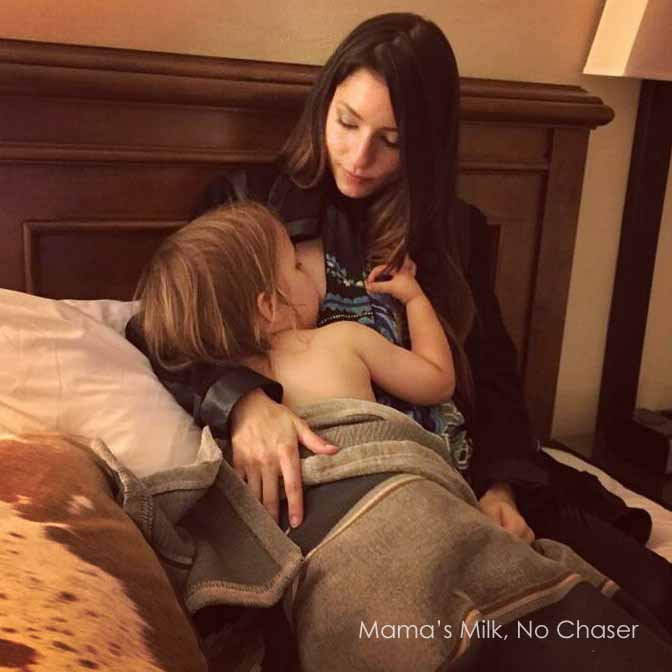
My breasts enjoyed a low-profile life before their eventual employment in the food industry (specializing in the Kids Menu, of course). I like to think of this 23-year long period of inconspicuousness as a special favor to me from genetics that seem to favor physical minimalism.
I hadn’t expected this, though: What served that long as basic decoration had, in the birth of a moment, become the absolute rulers of my body and my days — and the body and days of another tiny human being too, for countless flips of the calendar’s months.
Even more so… I hadn’t expected how reforming my attitude about a single body part could void most of my earliest ideas about self-image, self-appreciation, power, and purpose.


“racine femme enceinte” via esprit-de-la-nature.fr
“There is no other organ quite like the uterus. If men had such an organ they would brag about it. So should we.” – Ina May Gaskin


Moving into winter now, the general atmosphere of life is all about reminiscing and catching up.
I’m so thankful for this little blog, the outlet it’s provided to write about what’s relevant to me at this time, and especially happy to have connected with many of those who follow this page and take time out of their days to read my posts. ❤
So, in anticipation of slowing down with post frequency during the holiday season, I compiled this list of the top ten most-read pieces published on Mama’s Milk, No Chaser in 2015. (The year’s not over yet, but I’m confident enough these will remain in similar enough positions in a month’s time).
Hope you enjoy reading!


To the people who ask…
“Why do you *still* breastfeed?”
“Why do you breastfeed a toddler?”
…I could tell you a few things.
I could tell you that the World Health Organization recommends breastfeeding for a minimum of two years and beyond as desired by the mother and child.
I could tell you that the biologically natural age of weaning for humans is between 2.5 – 7 years.
I could tell you that breast milk is just as nutritious (and actually packed with more antibodies) for young children as it is for young babies.
I could tell you that my child likes to have the option of nursing for comfort, just as much as he likes hugs, kisses, and self-soothing techniques.
I could tell you that breastfeeding is more than just food.
Many of these answers worked for a while. A good two years, really.
But now that I’m growing a second child in my womb and MaiTai is three years old, the questions have changed.
“Why do you *still* breastfeed during pregnancy?”
“Will you tandem nurse and why would you do that?”
This time the answer is simply… I don’t know.
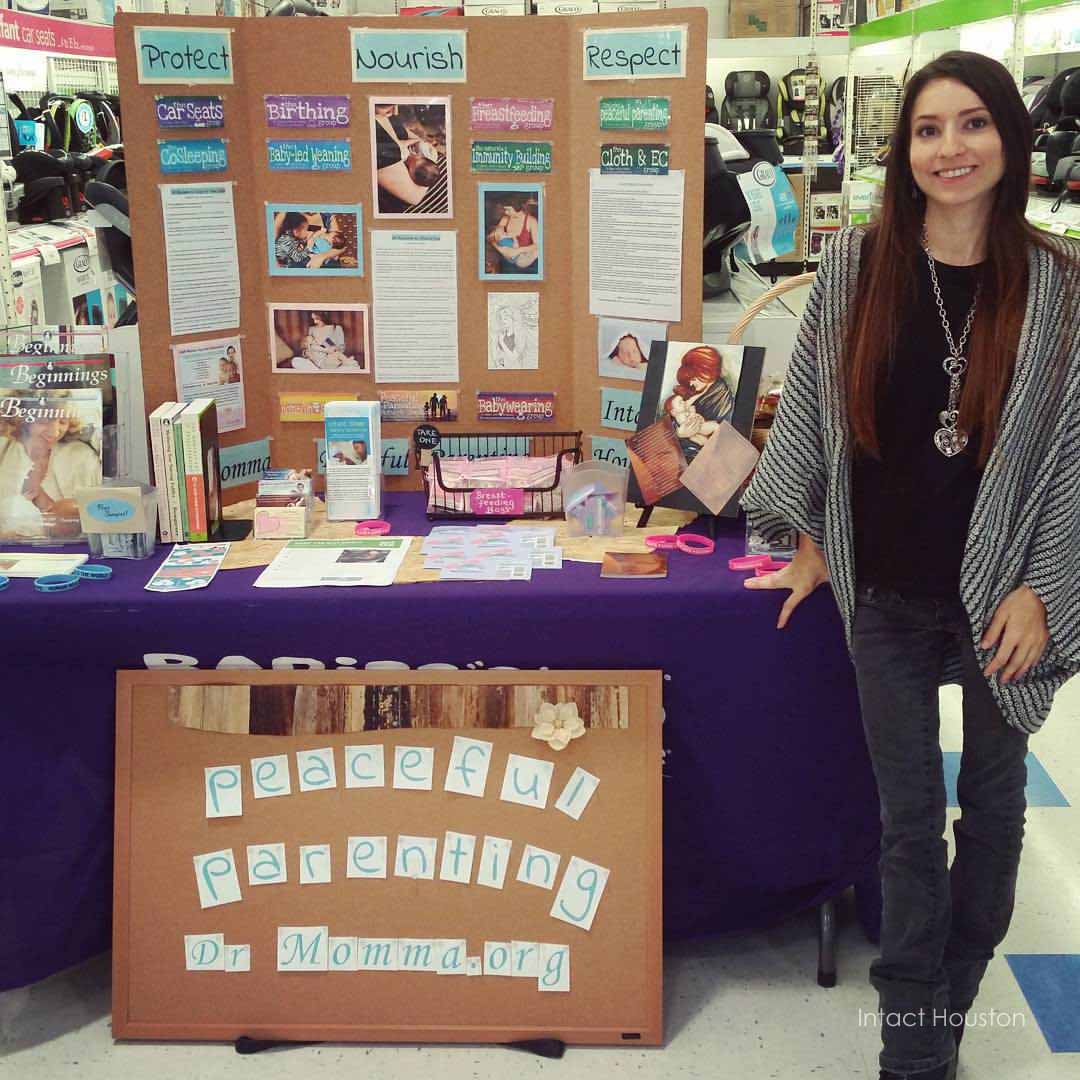
Last weekend I hosted a Peaceful Parenting table for Intact Houston/Intact Texas, local chapters for Saving Our Sons (the not-for-profit organization Peaceful Parenting/Dr. Momma‘s focus on circumcision).
My challenge was to include genital autonomy as one crucial component of the peaceful parenting lifestyle … without calling it by name.
I had spoken with a marketing director at my local Babies ‘R’ Us about setting up inside the store to hand out information. After browsing the Dr. Momma web site, she said she’d love to have us there. In fact, as a company they’re very welcoming toward many of the topics mentioned, she explained. Ones like co-sleeping, breastfeeding (they hold regular classes there for newbies) and child-led weaning, babywearing (regular classes at Babies ‘R’ Us for this too), encouragement of gentle discipline and alternatives to punitive parenting (i.e. spanking and crying-it-out) and so on.
But…(there’s always a but, isn’t there?)


There are quite a few ways to guess a baby’s sex. As far as concluding whether to expect a boy or girl, you could try the Nub Theory, Ramzi Method, over-the-counter gender test kits, Harmony test or chorionic villus sampling or amniocentesis done at a medical facility, and probably some other things I’ve yet to discover.
Old wives’ tales aren’t rooted in any kind of fancy science, but they can be fun to test out. Who wants to get all technical with fun anyways?!
Think you can accurately predict an unborn baby’s sex? Here’s a rundown of many common old wives’ tales that claim to know the secret behind your baby’s sex. You can use these clues along with the comparisons between my first pregnancy with a boy and my second/current pregnancy with a… well, you make the guess and let me know what you think 🙂
I’ll reveal the answer in an upcoming post!
(FYI, it’s the sex not the gender we find out by noting what type of gonads a baby has… though I get how the term “Gender Reveal Party” caught on whereas the potentially confusing “Sex Reveal Party” never will. And another side wondering: why don’t any of these tests account for potential intersex babies?).
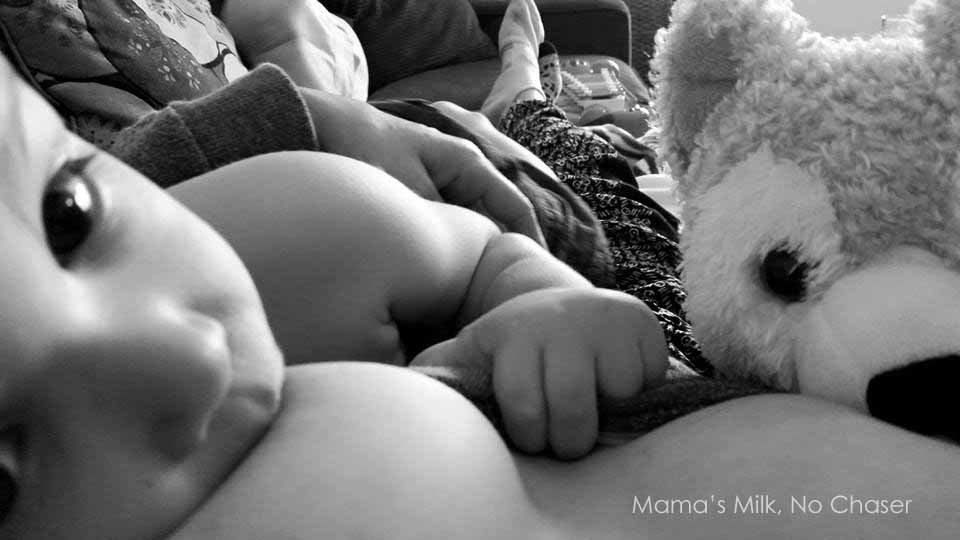

I remember being a toddler. Breastfeeding was nowhere on my radar. At ages three to five (and before and beyond), I had no awareness of any of my peers being nursed at home or elsewhere.
I didn’t breastfeed at age three. I also didn’t breastfeed at age three hours or age three months, not unlike the majority of my generational comrades. My own home was a warm and attachment-friendly one of course, but breastfeeding was never part of it.


Disclosure: As the sole owner, writer, and publisher of this web site, I confirm that I do not receive money or sponsorship from any cloth diaper manufacturers or affiliates.
First things first: Cloth diapering doesn’t have to be all or nothing. You can choose to cloth diaper 24/7 from birth, or wait until baby has passed the meconium stage, or use cloth at home but disposables when out and about/traveling/with another caregiver… There are so many ways you can make cloth diapering work for YOU.


So you breastfeed. And your child loves it… and you love it… but what else is there after, you know, weaning? How else can you share this overflowing passion in your heart? If your fondness for natural child nurturing goes beyond summer fling status, perhaps you’ve found your calling. Here are a few ideas that just might be the answer for you.
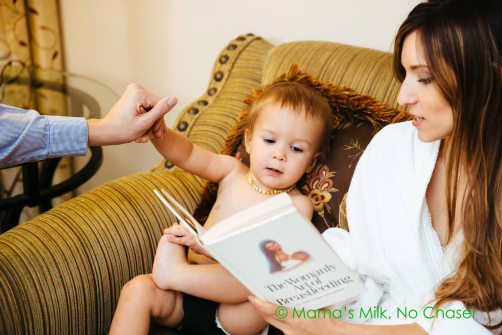
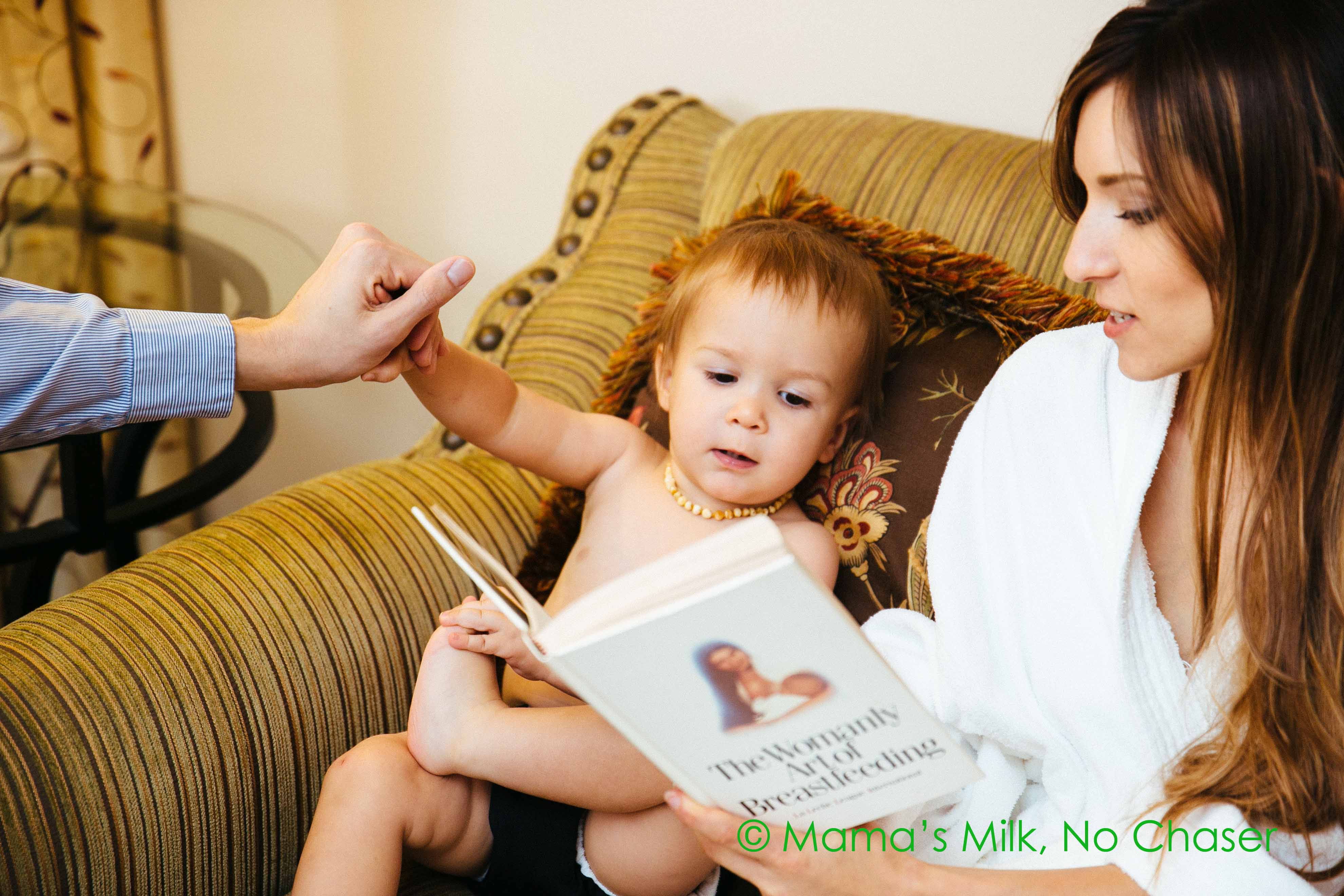
I’m sure you already own La Leche League’s “bible,” The Motherly Art of Breastfeeding. And I bet you’ve already studied everything written by Dr. Sears, Ina May Gaskin, Nancy Mohrbacher, Kathleen Kendall Tackett, Kathleen Huggins, and Dr. Jack Newman on the topic of breastfeeding.
But maybe now your nursling is old enough to read a breastfeeding book of his own before bedtime. Maybe you’re over all the “how-to’s” and crave to read a book created especially for impassioned breastfeeders. Or maybe you’re expecting a new nursling soon and want to familiarize yourself with previously uncharted territory.
Here are books about breastfeeding that deserve a spot on your holiday wish list and a home in your permanent collection!
First, a few stocking stuffers for your kids…
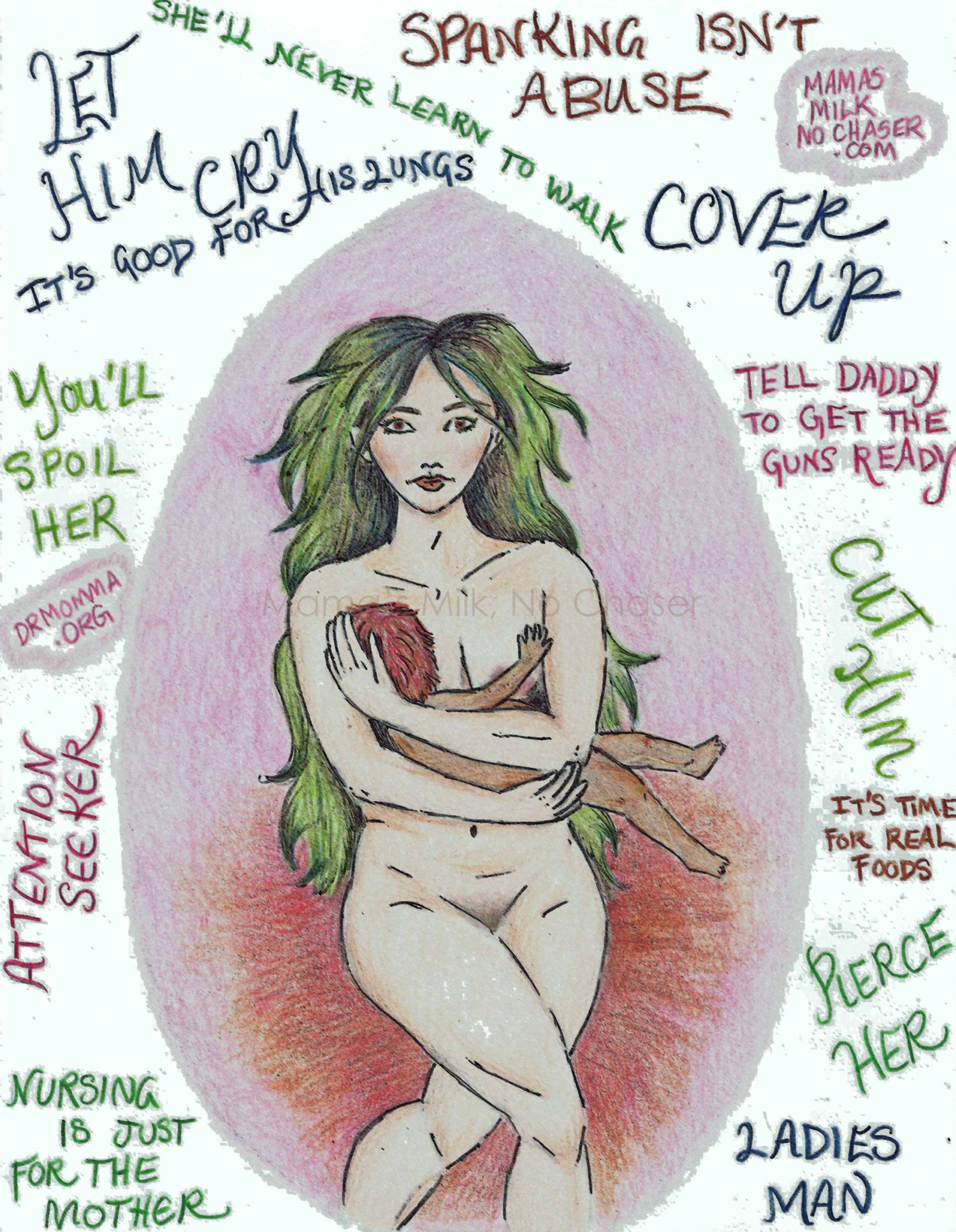

Anyone who follows this site will understand this post is *OBVIOUSLY SATIRICAL.*
Newcomers, take a moment to think about what the above picture symbolizes to you. The mother, naked and vulnerable, preserves a bubble of peace with her baby, in seemingly necessary quarantine from the bold, harsh words that hope to infiltrate their haven with little concern for the affect it might have upon them.
Here are not-so-uncommon perspectives (inspired by actual commentary I’ve seen or heard) that demonstrate how to upset and further isolate yourself from the not-so-uncommon kind of woman described above.
1). Let him cry… it’s good for his lungs.
Then try to convince her that dropping him on his head is good for his brain.
2). You’ll spoil her.
A baby spoils by being carried just like an apple spoils simply by being carried. That’s how it works.
3). She’ll never learn to walk.
Then you can explain how it’s better for both of them if the child is forced to walk everywhere. It’s not like it’d inhibit the mother from moving about in a timely manner or result in the child feeling abandoned. Read More

 Mama's Milk, No Chaser